Bulgaria/Music/Instruments Pg 2
Gadulka
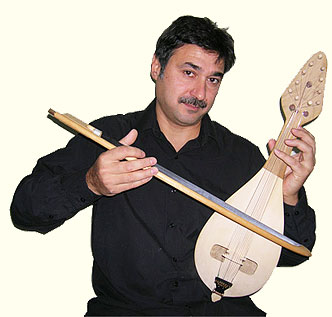
The gadulka is a simply-made Bulgarian folk instrument of the chordophone family, known mainly in Thrace, the Balkans and central Bulgaria. Sound is produced by rubbing its strings with a bow.
The gadulka is pear-shaped with a long neck ending in a "head", all carved from a single piece of wood (sycamore, walnut or pear). The body is hollowed out to make a soundbox. There are three keys in the "head" on which the strings are wound. They then pass over the bridge and are held in place by the tailpiece. The upper surface of the body has two openings (sound holes) that allow the air from the inside to come into contact with air on the outside. To the right of the bridge on the soundbox is a little wooden stick called the soundpost that transmits the vibrations of the strings to the enclosed air. The bow is curved and is made of dogwood or willow. The hair of the bow is horse tail.
The strings are made of sheep gut or metal. The number of strings can vary from three to four strings depending on the region of the country and their tuning can also vary. Modern gadulkas have seven to ten extra strings that are thinner and placed at a lower level than the others. They make the instrument sound louder.
Musicians make sounds by pressing the first string with their fingernails and the two others with their fingertips. The instrument has a pleasant, tremulous sound that is quite soft. Today, some musicians play jazz improvisations and modern music on the gadulka.

© Gans 2011